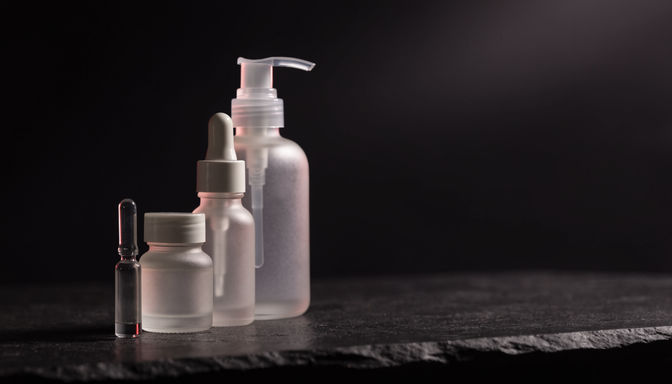
"Dupe" has become a marketing category of its own, which means the word now covers both genuine equivalents and things that merely look similar in a bottle. The difference is predictable by category.
Where dupes genuinely work
Complexion and colour. Primers, liquid highlighters, cream blush, brow products, eyeshadow. The formulation science is mature, the ingredients are commodities, and a $14 product can perform within a hair of a $49 one. The gap shows up in wear time, not in how it looks at 10am.
Tools. A $10 synthetic brush applies foundation as well as a $60 one. The premium buys a handle and a box.
Basic moisturisers. A well-made ceramide cream at $17 does more measurable barrier work than most $70 creams, because the active ingredients are cheap and well understood.
Where dupes do not work
Sunscreen. Filter technology is patented and regionally regulated. A cheap sunscreen using older filters is not the same product as one using modern broad-spectrum filters, whatever the SPF number says. This is the category where paying more is most defensible.
Actives, when pH and stability matter. A 2% salicylic acid at the wrong pH is not a dupe of one formulated correctly — it is an inactive product. Vitamin C is worse: an unstable formula in clear packaging oxidises within weeks and does nothing.
Fragrance. A "dupe" fragrance usually replicates the opening and collapses within an hour, because the expensive part of a perfume is the base and the fixatives. You are not buying the same thing.
Anything where the packaging is the technology. Unstable actives need airless pumps and opaque containers. The same formula in a clear jar is a different product by week six.
The questions worth asking
- Is the active disclosed at a concentration? If not, there is nothing to compare.
- Does the pH matter for this ingredient? For acids, yes, and almost nobody publishes it.
- Does it need protective packaging? Vitamin C and retinoids do.
- Is the claim about performance or about feel? Feel dupes easily; performance often does not.
The inflated-MRP trap
Separate from dupes and worth naming. A permanent "70% off" is not a discount — it is the price, with a banner on it.
Check the pre-discount price against two or three other retailers. If nobody anywhere sells near that number, the reference price is fiction. Judge every offer on what you actually pay, never on the percentage saved.
A reasonable rule
Spend on sunscreen, on actives where formulation quality is verifiable, and on anything that has to survive in the packaging it came in.
Save on colour cosmetics, tools, basic moisturisers and cleansers — a cleanser is on your face for forty seconds.
Frequently asked
In colour cosmetics, tools and basic moisturisers, usually close enough that the difference does not matter. In sunscreen, unstable actives and fragrance, generally not — those depend on patented filters, correct pH or protective packaging that cheaper versions skip.
Sunscreen, because filter technology is patented and regulated. Actives where pH and stability are verifiable. And anything that needs airless or opaque packaging to stay active, such as vitamin C and retinoids.
Check the pre-discount price against two or three other retailers. If nobody sells it near that price, the reference price is invented. Judge the offer on what you actually pay, not the percentage claimed.